
Restoring a natural voice – ultrasonic tracking of articulation after laryngectomy
Patients after total laryngectomy lose the laryngeal sound source but keep full control of the tongue, lips and palate. In the FOREM project (Phoniatric Speech Reconstructor) we used ultrasound to read articulation movements and turn them into natural-sounding synthetic speech.
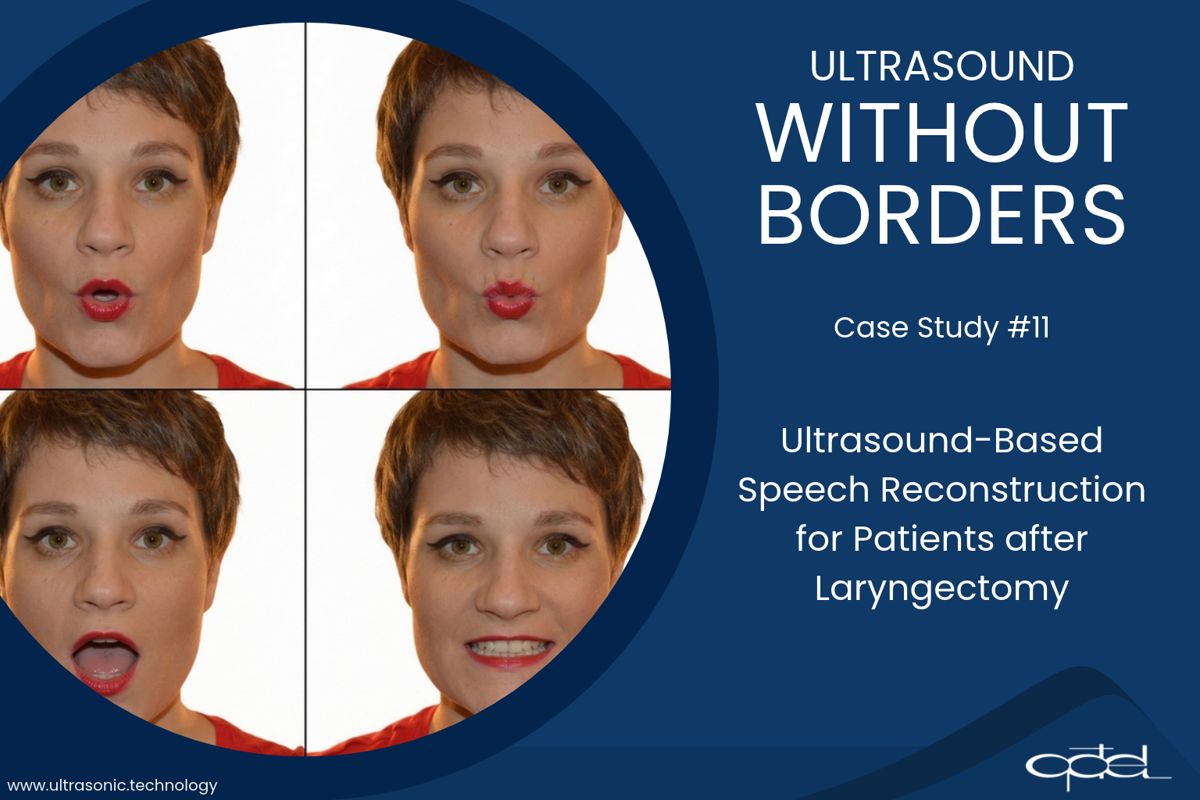
Challenge
Popular electronic larynges (electrolarynx devices) held against the neck produce a monotonous, metallic sound that is hard to understand and stigmatises the patient. A solution was needed that reads articulatory intent directly from the geometry of the vocal tract.
OPTEL solution
- Active sampling of the vocal tract: low-energy, completely safe ultrasonic waves monitor tongue position and movement in real time during pseudo-whisper (silent speech).
- Extraction of acoustic features: a multichannel acquisition system records echoes from the soft tissues of the oral cavity at a high refresh rate.
- Speech synthesiser control: signal processing algorithms map ultrasonic signatures to voice parameters and generate fluent speech.
Results
- A new quality of communication: a move away from the mechanical sound of classic electrolarynx devices towards more natural articulation.
- Interdisciplinary technology transfer: industrial echo-analysis algorithms used to improve the quality of life of cancer patients.
Key parameters
- Method: active ultrasonic sampling of the vocal tract
- Input: pseudo-whisper (silent articulation)
- Output: control parameters for a speech synthesiser
Related pages
Looking for an experienced engineering partner for MedTech and ultrasonic diagnostics projects? Let's talk about your project.
Need a solution for a specific measurement problem?
OPTEL can evaluate the measurement physics, transducers, electronics and software before a full system is built.
Start with a feasibility studyContact OPTEL